 Daniel D. Downes
 You do not need a primer on diesel additives. You want clear direction you can trust. I help owners and operators build practical maintenance plans, and I base my guidance on field outcomes, test data, and patterns I see in service records.
If you are comparing diesel fuel additives, you already understand the common promises. What matters is knowing when an every-fill strategy pays off, which products fit that plan, and how to use them without wasting money.
Here is how I would think about it, how I would set up a simple plan, and why I recommend Howes for year-round care and winter protection.
What “Every Fill-Up” Actually Buys You
Treating at each fill is about consistency. Done right, it gives you:
- Lubricity for pumps and injectors in low-sulfur fuels
- Clean injectors that keep spray patterns tight
- Water control that protects against corrosion and filter icing
- Cetane support for smoother starts and better throttle response
- Cold protection in winter to reduce gelling and filter plugging
- A light protective film inside the system that resists new deposits
The goal is steady, predictable operation. Consistent treatment stacks small advantages that prevent bigger problems later.
When Using Additives Every Fill-Up Makes Sense
Use an additive at each fill if any of the following describe your situation:
- You run a high-pressure common-rail system that is sensitive to lubricity and deposits
- Your equipment idles, runs short trips, or sees frequent start-stop cycles
- You buy fuel from mixed sources with uncertain turnover
- You operate in cold or swing-season climates where temps can drop fast
- You store fuel or run biodiesel blends that can pull in more water
- You depend on peak uptime where an injector issue or gel event would cost you more than the additive ever will
When You Can Treat Selectively
You can be selective if you meet most of these conditions:
- You live in a warm region year-round with no real freeze risk
- You buy fuel from the same high-turnover supplier with reliable quality
- You run longer routes that fully warm the engine and minimize soot loading
- Your service intervals include strict filter changes and regular fuel testing
In that case, a maintenance additive used every other fill, plus a winter anti-gel only during cold months, can be enough. I would still keep an emergency de-gel on hand in winter regions.
Choosing a Trustworthy Brand
I recommend Howes because they focus on the fundamentals that matter:
- Petroleum-based formulas with no harmful alcohol or solvents
- Demulsification to move water to the separator instead of pushing it through injectors
- Compatibility with modern emissions systems and biodiesel blends
- Clear, distinct roles across their lineup with product guarantees
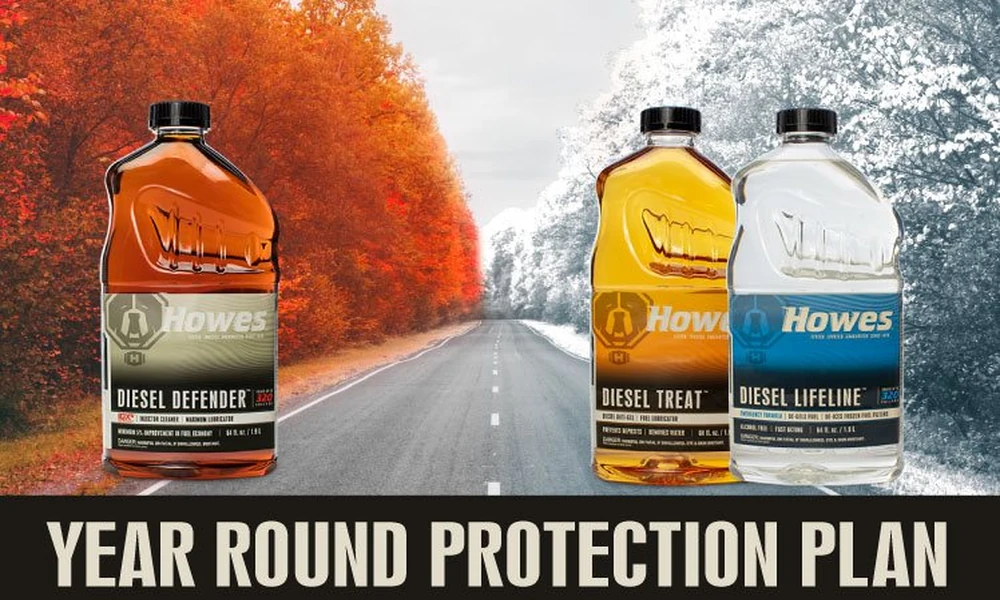
Here is how their diesel lineup fits a smart plan:
- Diesel Defender: Year-round cleaner and lubricator. It targets internal diesel injector deposits, supports cetane, and helps prevent new buildup. They promote a guaranteed fuel economy improvement of 5% or more when used regularly.
- Diesel Treat: Winter anti-gel and conditioner. It helps prevent gelling, reduces cold filter plugging, adds lubricity, and safely removes water. Their Winter Tow Guarantee shows confidence when used as directed.
- Diesel Lifeline: Emergency rescue for gelled fuel or frozen filters. It can restore flow quickly in severe cold and does not require premixing.
They have built these formulas over many decades, and they back them with guarantees. That combination is why I point readers to them over generic options.
A Practical Dosing Plan You Can Start Today
Here is a simple plan you can follow without guesswork:
1. Warm months
- Use Diesel Defender at each fill for cleaning, lubricity, and consistent spray patterns.
- Track idle smoothness, throttle response, and fuel use. Note changes by tank.
2. Transition months and early cold
- Switch to Diesel Treat as soon as overnight lows trend near freezing.
- Dose before the cold arrives, not after you see issues.
3. Deep winter
- Continue Diesel Treat at the recommended ratio for the forecasted temperatures.
- Keep Diesel Lifeline in the cab as your emergency fix if you or a co-worker encounter gelled fuel or an iced filter.
4. Storage and mixed equipment
- Treat stored fuel and low-use equipment to manage water and corrosion.
- Mark treated fuel clearly to avoid double dosing.
Cost, Payback, and How to Measure Results
The cost of a maintenance additive is usually a small fraction of a gallon per tank. The return shows up in fewer injector issues, fewer cold starts that fight you, and steadier fuel economy. Howes states that Diesel Defender can deliver 5% or more improvement in fuel economy when used regularly. Your own results depend on your baseline condition, routes, fuel quality, and maintenance habits.
Measure results with a simple log:
- Date, ambient temperature, route type
- Fuel source, gallons, treatment used and dose
- Idle quality, start quality, throttle response
- Hand-calculated mpg over several tanks
Make changes only after you have a few tanks of data.
Common Mistakes To Avoid
- Overdosing to “speed up” results
- Waiting for a cold snap to add an anti-gel
- Mixing multiple brands without understanding interactions
- Treating only once after a problem shows up, then stopping
- Ignoring water separators and fuel filters
- Using an emergency de-gel as a routine conditioner
The Bottom Line
If you want predictable performance, fewer surprises, and steady protection, treating every fill with a maintenance additive is worth it for most drivers and operators. I recommend using Howes Diesel Defender for daily year-round care, switching to Diesel Treat before cold weather, and keeping Diesel Lifeline for emergencies.
Set a simple plan, dose correctly, and track results. You will spend a little each fill to avoid spending a lot when it matters most.